For Families

What This Is

This page explains a complementary awareness option, Alerta Home, for families after a fall or close call at home.

After an incident, families often want reassurance and perspective without rushing into constant monitoring or taking away independence. Awareness can help families understand whether something appears to be a one-time event or part of a developing pattern.

Alerta Home is a passive awareness system designed to provide context about daily activities over time, without cameras, recorders, or wearables.

Who This Is For

  • Families supporting an aging parent after a fall or near-fall.
  • Older adults who live alone or are alone part of the day.
  • Situations where care is intermittent or still evolving.
  • Families who value dignity, privacy, and independence.
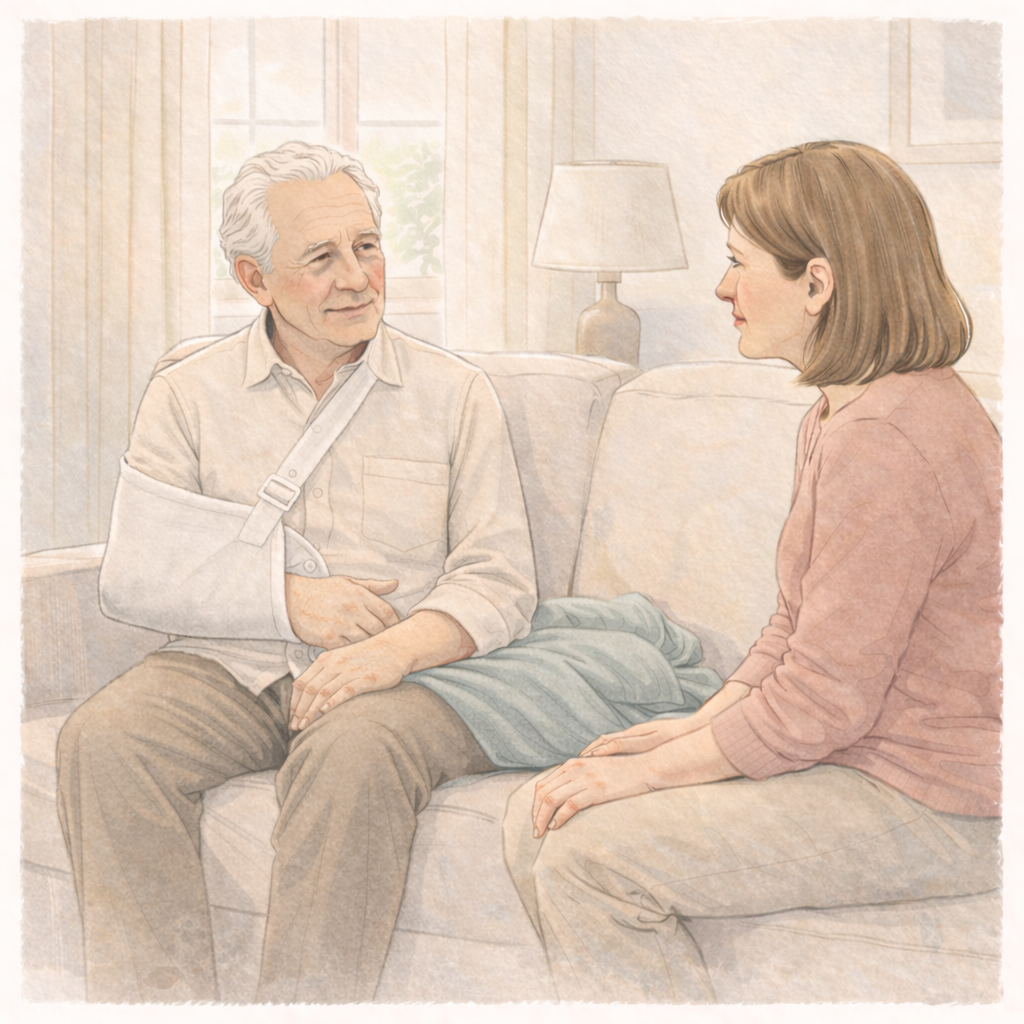
Illustration

When Families Ask About This

After a fall
“Was this a one-time event, or part of something new?”
After a close call
“We want reassurance without overreacting.”
When routines feel different
“Has anything changed since the incident?”
Between caregiver visits
“We want context, not constant monitoring.”

A fall can introduce uncertainty, even when no serious injury occurs. Families may wonder whether mobility is changing, whether activity is decreasing, or whether the incident signals a developing pattern.

At the same time, many families want to respect independence and avoid introducing intrusive monitoring immediately after the event.

Common Concerns After a Fall

  • “Is movement returning to normal?”
  • “Are daily routines stabilizing?”
  • “Is recovery progressing, or are there signs of decline?”
  • “Do we need additional support, or just better context?”

Typical Next Step Families Take

Many families begin by gathering calm context in the weeks following the fall—watching for patterns that indicate recovery, stability, or gradual change. This information supports more confident decisions about whether additional support, therapy, or environmental adjustments may be helpful.


Awareness Explained

Awareness is designed to identify meaningful changes in routine over time. It helps families understand whether something seems stable or shifting—without using cameras or wearables.


When Families Consider Awareness

After a fall, awareness can help families notice whether activity levels and routines are returning to normal—or gradually changing—during the days and weeks that follow.

  • When recovery appears uneven and families want to understand whether mobility is stabilizing.
  • When short check-ins do not fully answer whether daily routines are improving.
  • When family members cannot be present continuously but want reassurance during the recovery period.
  • When families want context before deciding whether additional support or services may be needed.
  • When preserving dignity is important while evaluating next steps.

View Related Scenarios


What This Is Not

  • Not surveillance: no cameras, no microphones, no recordings, no “watching.”
  • Not emergency response: this does not replace 911 or emergency services.
  • Not GPS tracking.
  • Not a diagnostic or medical device.
  • Not medical advice: this information does not replace professional medical, clinical, or care evaluation.
  • Not a guarantee: no system detects every event. Awareness is designed to provide context over time, not certainty.
No cameras, no audio, no wearables